See the stop immediately
Machine state changes make downtime visible while it is happening rather than at the end of the shift.

TURN UNEXPLAINED STOPS INTO ACTIONABLE LOSS DATA
ClearRivet connects stop events with operator reasons and live downtime Pareto views so Australian manufacturing teams can see which losses are happening now, which ones repeat and where to focus first.
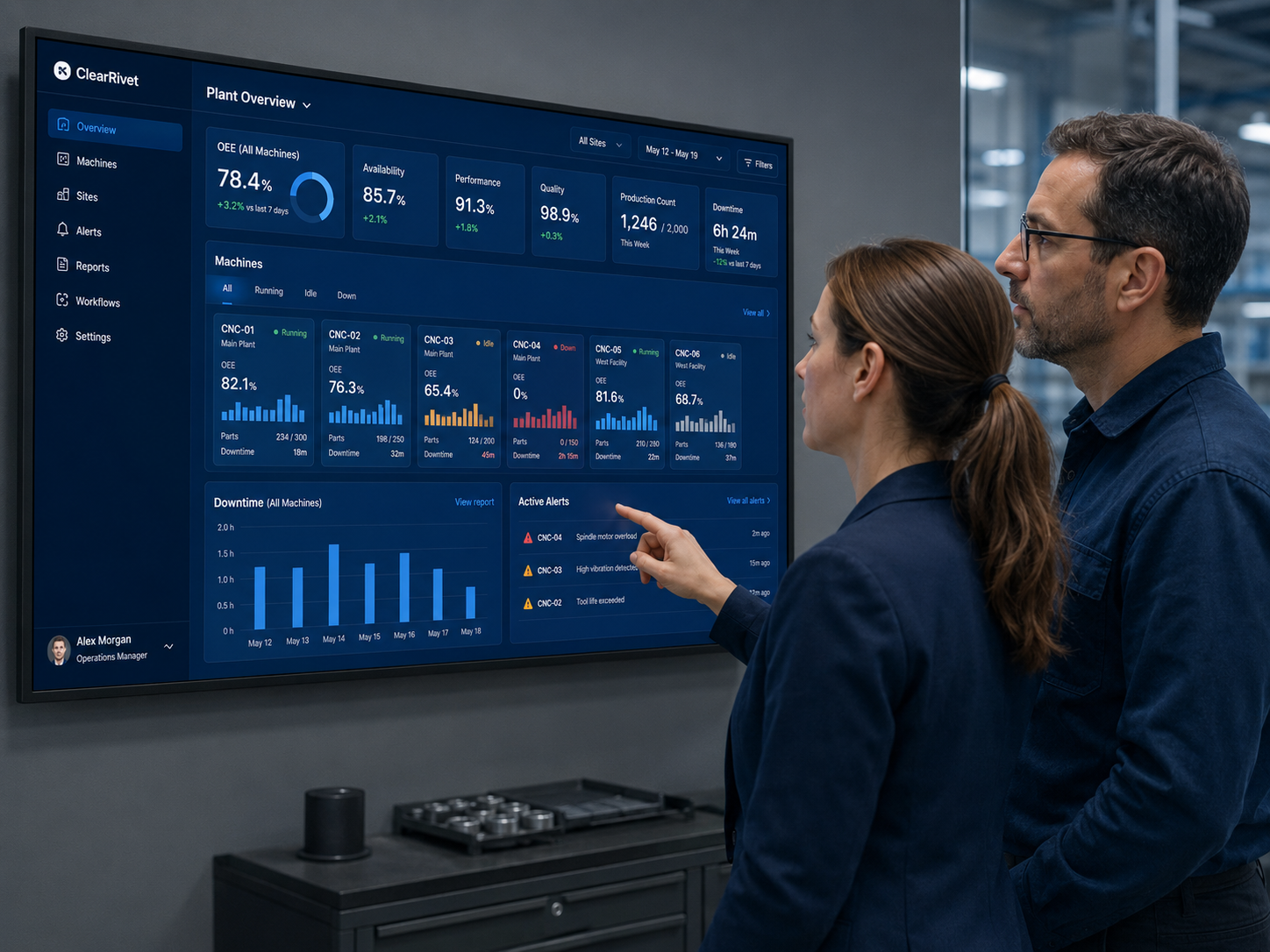
REAL CLEARRIVET PRODUCT VIEW
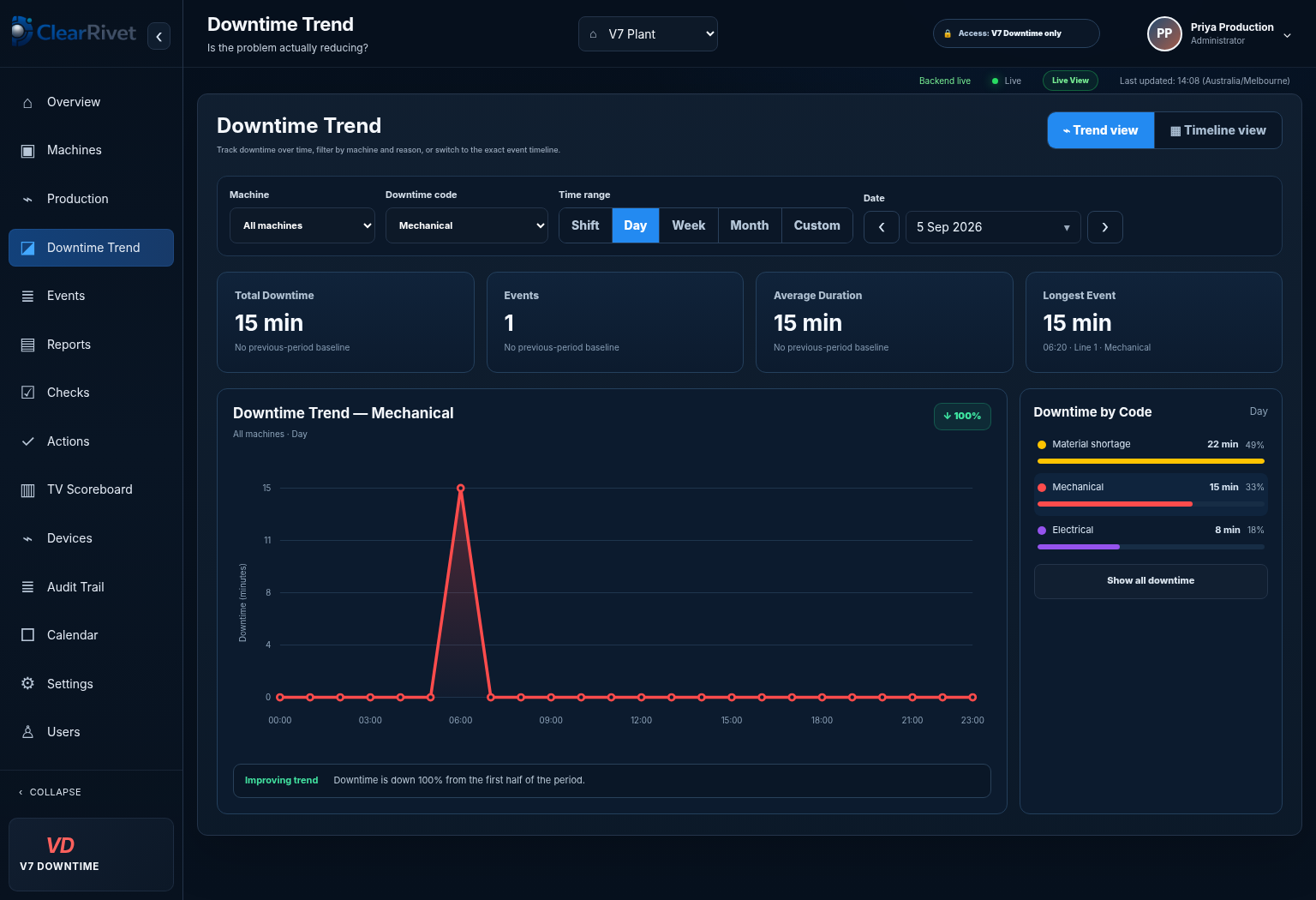
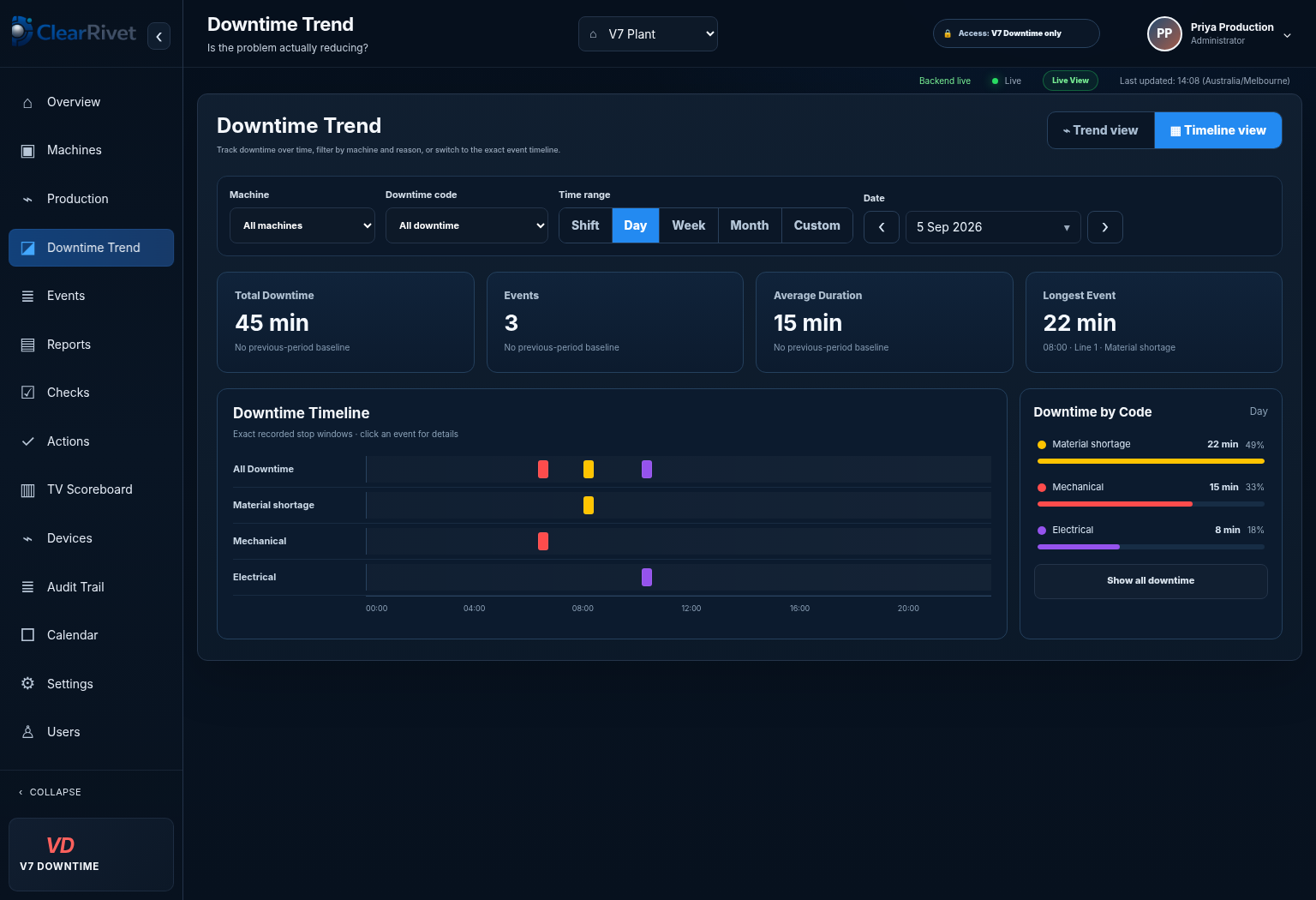
These are ClearRivet application views from a working test plant, showing recorded downtime by reason, trend and exact event timeline rather than a marketing mock-up.
THE OPERATING PROBLEM
Downtime analysis is only as useful as the event record behind it. ClearRivet is designed to detect the stop, preserve its duration, capture the operator’s reason and retain the event for later Pareto and trend analysis.
Machine state changes make downtime visible while it is happening rather than at the end of the shift.
Prompt for a defined downtime reason so the event has production context.
Use event history and loss ranking to focus maintenance and improvement work on repeat causes.
CLEARRIVET CAPABILITIES
ClearRivet is designed to keep the signal, production context and operational response in one record instead of scattering the information across paper logs, spreadsheets and disconnected dashboards.
FROM STOP TO ROOT CAUSE
A red status alone is not enough. The useful record includes when the machine stopped, how long the event lasted, what the operator selected as the reason, any comments or maintenance context, and whether the same loss is repeating. ClearRivet keeps that chain together so the Pareto is built from actual production events rather than reconstructed after the shift.
Very short interruptions can be recorded without forcing the same operator workflow as longer events. This helps expose recurring small losses without creating unnecessary prompts on the floor.
Downtime categories can be configured around the plant's real loss language so operators can select a meaningful reason quickly and supervisors can compare like-for-like events.
Managers and improvement teams can use downtime history to identify whether a few long events or many repeated short events are consuming the most production capacity.
USE THE DATA DURING THE SHIFT
Traditional downtime reporting often arrives after the opportunity to act has passed. ClearRivet is designed to make the active stop visible, show its duration increasing live and keep the event available to operators, maintenance and supervisors. That gives the team a shared record during the shift and a cleaner history for later analysis.
For improvement work, the goal is not simply to produce a bigger report. The goal is to identify a repeatable loss, assign the right response and then verify whether the loss reduced after the change.
COMMON QUESTIONS
ClearRivet is designed to prompt operators to select configured reasons and preserve that context with the machine event.
ClearRivet supports micro-stop concepts so very short events can be recorded without forcing the same workflow as longer production stops.
Yes. Downtime events are retained for history, ranking and trend analysis so recurring losses can be investigated.
AUSTRALIAN MANUFACTURING SUPPORT
ClearRivet is Australian-operated, priced in AUD and designed so a manufacturer can begin with one machine before deciding on a wider rollout. The 14-day live-machine trial starts when machine data is flowing, and setup and commissioning are included for the standard connection paths.
Prefer to talk first? Call 0401 461 142 or contact ClearRivet.
RELATED SOLUTIONS
MAINTENANCE RESPONSE
When a call for help is timestamped, plants can separate time waiting for support from time spent diagnosing and repairing the machine.
A digital operator help request can create the timestamp needed to separate waiting time, response time and repair time.
See it. Then prove it.